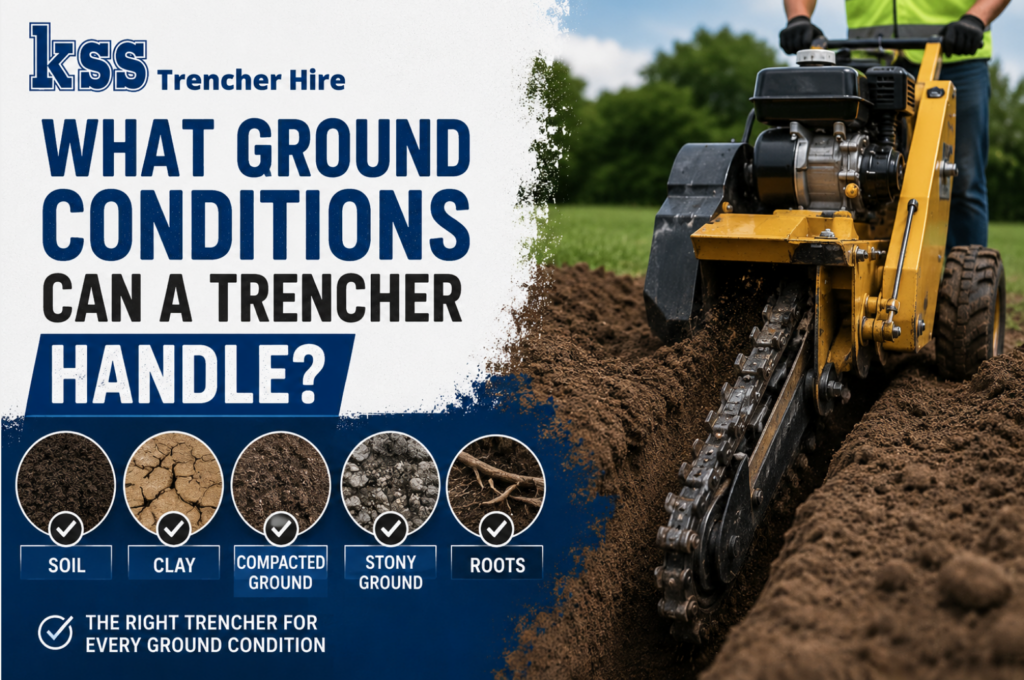
Trenchers are great for quickly creating trenches of a consistent width. They can be used for a variety of projects, including utilities, drainage and irrigation.
But what ground conditions can a trencher handle?
Trencher Ground Conditions
Ground conditions can have a big impact on how easy it is to use a trencher. Whether you’re cutting through soft soil or harder materials, knowing what your machine can handle will help you select the right trencher for the job.
Can a Trencher Dig Through Soil?
Yes. Regular soil is one of the most common surfaces for trenching.
A trencher uses a chain with cutting teeth to remove material as the machine moves along your chosen route. This allows you to create a consistent trench for:
- Water pipes
- Drainage
- Irrigation
- Electrical cables
- Utilities
The trencher you need will depend on the required depth and width, as well as the condition of the ground.
Can a Trencher Dig Through Clay?
Yes, but the condition of the clay can affect how easily you can cut through it.
Dry, compacted clay can be harder to cut than loose soil, while very wet clay can become sticky and cause its own problems.
You may therefore need to choose your machine based on the condition of the clay.
Can You Use a Trencher on Compacted or Stony Ground?
Trenchers can cut through tougher, compacted ground, although you may need more powerful equipment for particularly demanding conditions.
Some trenchers can also handle smaller stones and loose material. However, large rocks and heavily rocky ground can obstruct the machine.
Always assess the site before choosing your trencher.
Can a Trencher Cut Through Roots?
You may encounter roots while trenching. Smaller roots may be manageable, but large tree roots can obstruct the machine and cutting them could affect the health of the tree.
Where possible, plan your route to avoid large roots.
Can You Use a Trencher on Wet Ground?
Slightly damp ground may still be suitable for trenching. However, heavily saturated or waterlogged ground can cause problems with traction and removing the excavated soil.
If conditions are particularly wet, it may be better to wait until the ground is drier.
What Else Should I Consider Before Trenching?
Ground conditions aren’t the only thing to think about. Before starting, consider:
- How deep and wide the trench needs to be
- Access to the site
- Space available for the machine
- Underground utilities and services
- Surface conditions
- Obstacles along the route
Always check for underground services before digging to avoid damaging pipes, cables or other utilities.
Which Trencher Should I Hire?
There’s no ‘one size fits all’ trencher.
KSS Trencher Hire offers both walk-behind and sit-on trenchers, giving you options for different projects and site conditions.
Smaller trenchers can be better where access is restricted, while larger machines are suited to more demanding projects.
Trencher Hire for Different Ground Conditions
At KSS Trencher Hire, we provide a range of trenchers for both trade and domestic customers. Our equipment can be used for projects including utilities, drainage, landscaping and irrigation.
Tell us about your project, required dimensions and ground conditions, and we can help you choose suitable equipment.
Contact KSS Trencher Hire
Still not sure which trencher you need?
Give KSS Trencher Hire a call or send us an email. We’ll discuss your project requirements and help you find a trencher suited to your ground conditions.